
Board & Train vs. In-Home Dog Training: Which Is Right for Your Dog?

Board & Train vs. In-Home Dog Training: Which Is Right for Your Dog?
The question comes up in almost every intake at WooF Dogs: "Should we do board-and-train, or just do private lessons?" Both programs work. Both produce real results. The decision isn't about which format is "better" in the abstract. It's about which one fits your dog's behavioral profile, your schedule, and how quickly change actually needs to happen.
This comparison breaks down exactly how each format works, which dogs genuinely benefit from residential training, what each costs, and how WooF Dogs, with over 20 years of South Florida dog training intakes, approaches the recommendation based on what we see in the dog in front of us.
full pricing breakdown for all South Florida training programs
TL;DR: Board-and-train is faster and better suited for moderate-to-severe behavioral issues. Dogs see change in days, not weeks. Private in-home sessions build stronger owner skills and work well for basic obedience and mild concerns. Professionally trained dogs achieve a 95% command success rate versus 75% for home-trained dogs (Banfield, 2023). Neither is universally superior; the right format depends on your dog.
What Is Board-and-Train, and How Does It Work at WooF Dogs?
Board-and-train is a boarding training program where your dog stays with a certified trainer for 2-6 weeks, receiving structured sessions multiple times daily. According to a 2024 survey by the International Association of Animal Behavior Consultants, 63% of professional trainers reported increased demand for intensive behavioral programs, with board-and-train being the primary format for cases requiring rapid behavioral change (IAABC, 2024).
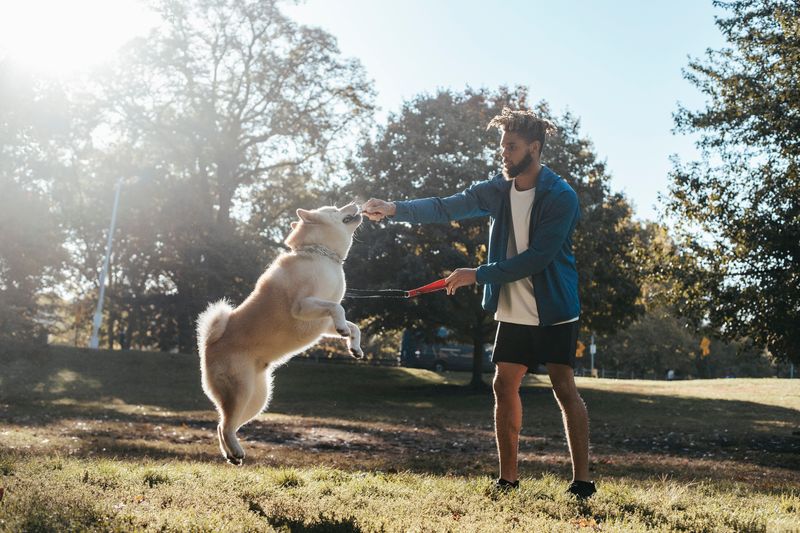 Photo: Zen Chung / Pexels
At WooF Dogs, board-and-train starts with an intake evaluation where we assess temperament, triggers, existing commands, and the behaviors the owner wants addressed. Your dog then enters our boarding program, where sessions happen 2-6 times daily around meals, rest, and walks. We use balanced training-based methods rooted in applied behavior analysis, not suppression.
What happens during a board-and-train program:
- Days 1-3: Acclimation, trust-building, baseline assessment
- Days 4-10: Core skill acquisition (sit, down, stay, come, place, heel, leash manners)
- Days 11-14+: Distraction proofing, generalization to new environments
- Last Day: Owner handoff sessions where you learn to maintain what the dog learned
The handoff sessions aren't optional. They're where the work transfers from the dog to you. A dog who completes board-and-train and whose owner skips the handoffs will regress. The training sticks when you do.
WooF Dogs dog boarding and training programs
How Does In-Home Private Training Work?
Private in-home training puts a certified trainer in your home (or in a facility session) for 40-minute visits typically spaced 1-2 weeks apart. Dogs trained before 16 weeks of age show 35% fewer behavioral problems as adults (JAVMA, 2022), and private sessions are the most effective format for starting that foundation early.
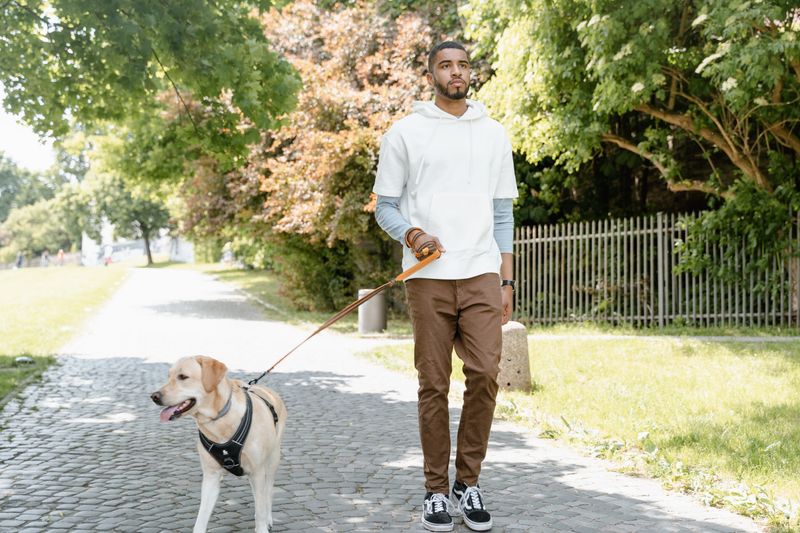 Photo: MART PRODUCTION / Pexels
Unlike board-and-train, private sessions happen in your dog's actual environment: the kitchen where counter-surfing happens, the front door where jumping starts, the sidewalk where leash reactivity kicks in. That context specificity is private training's biggest advantage.
What a private training package typically covers:
- Session 1: Assessment, household rules walkthrough, introducing marker training
- Sessions 2-4: Core commands, problem behavior targeting, owner mechanics coaching
- Sessions 5-8: Distraction proofing, real-world scenarios, generalization drills
- Homework assigned after every session, and progress between visits depends on owner follow-through
The honest trade-off: private training puts the work squarely on the owner. The trainer comes once a week. The other six days are yours to reinforce, practice, and maintain consistency. Dogs improve faster in private training when owners are engaged, structured, and following through on homework.
view private obedience training programs
How Do Board-and-Train and Private Lessons Actually Compare?
Board-and-train and private lessons differ across every meaningful dimension, not just cost. The right format depends on your dog's behavioral profile, your schedule, and what "success" looks like in your household.
The 10-factor comparison:
| Factor | Board & Train | Private Lessons |
|---|---|---|
| Duration | 2-4 weeks residential | 4-12 weeks (weekly sessions) |
| Upfront cost | $2,500-$5,000 | $300-$1,100 (package) |
| Time to visible results | 3-7 days | 3-6 weeks |
| Owner time required | Low (during program) | High (daily practice) |
| Owner skill building | Moderate (handoff sessions) | High (coached throughout) |
| Severe behavioral issues | Excellent | Moderate |
| Basic obedience / puppy | Good | Excellent |
| Schedule flexibility | Low (fixed residential) | High (weekly scheduling) |
| Environment generalization | Requires deliberate work post-program | Built in from session 1 |
| Long-term maintenance | Ongoing practice needed | Ongoing practice needed |
What we see at intake: The owners who do best with board-and-train are those with packed schedules and dogs with moderate-to-severe behavioral issues. The owners who do best with private sessions are those who want to understand why their dog does what it does, and who will actually do the homework.
Which Dogs Benefit Most from Board-and-Train?
Board-and-train produces the strongest results for dogs with behavioral issues that require high repetition, controlled environments, and a trainer present in real time to interrupt and redirect. Training reduces destructive behavior by 68% in dogs who complete professional programs (ASPCA, 2022), and that rate holds highest for dogs with entrenched habits who receive daily structured sessions.
Board-and-train is the right call when your dog:
- Has moderate-to-severe leash reactivity or dog-dog aggression
- Has destructive, obsessive, or out-of-control behavior that's creating daily household conflict
- Is a high-drive breed (Malinois, GSD, Pit Bull, hunting breeds) who needs significant structured stimulation
- Has had multiple failed attempts at private training without lasting results
- Is an adolescent (7-18 months) going through peak behavioral difficulty
- Needs significant distraction-proofing before real-world reliability
What board-and-train is not suited for:
It doesn't fix everything. Severe separation anxiety is often worse in a new residential environment, not better. Dogs with complex trauma or fear-based aggression may need slower desensitization work that board-and-train timelines can't support. And dogs who complete the program need owners who commit to the maintenance, otherwise gains erode within weeks.
Our observation: The single biggest predictor of whether board-and-train results hold isn't the dog's severity. It's the owner's consistency in the 30 days after pickup. Dogs whose owners commit to the post-program practice schedule retain commands at 2-3x the rate of owners who don't.
learn about WooF Dogs residential boarding and training options
Which Dogs Are Better Suited for Private In-Home Sessions?
Private sessions outperform board-and-train when the problem behavior is context-specific, when the owner's involvement is essential to the fix, or when the dog is young enough that foundation-building (rather than behavior modification) is the goal. The 2023-2024 APPA National Pet Owners Survey found 32.7% of dog-owning households enrolled their dog in formal obedience training (APPA, 2024), with most starting in private or group formats.
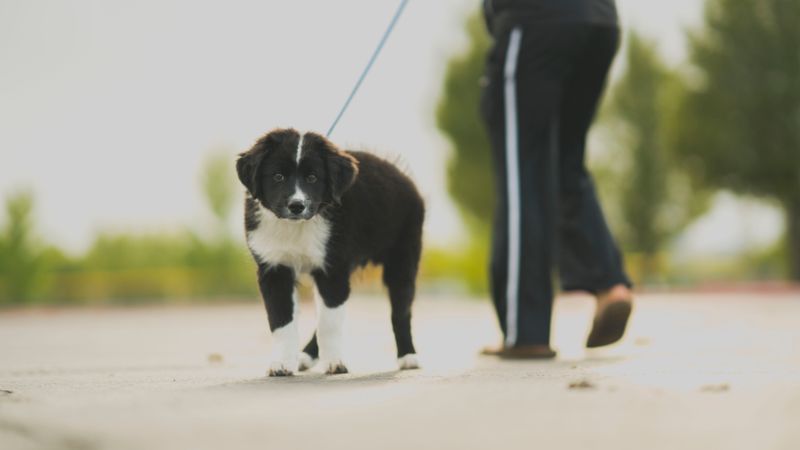 Photo: Mikayla Meeker / Pexels
Private sessions are the right call when your dog:
- Is a puppy (8 weeks-6 months) building a behavioral foundation
- Has mild to moderate behavioral concerns without entrenched habits
- Needs training that's specific to your home environment (door manners, counter-surfing, jumping on guests)
- Has separation anxiety (being in their home is critical for this work)
- Has a reactive trigger that only occurs in specific locations (backyard fence, specific walking route)
- Is already solid on basics and needs proofing in their own environment
When private sessions give you the most value:
The owner is actively involved, asks questions, and does the assigned homework. Private training is a coaching relationship. The trainer is teaching the human as much as the dog. If you're willing to do the daily practice, private sessions deliver compound returns. If your schedule makes consistent daily reinforcement impossible, the gap between sessions can undo what the trainer built.
view private obedience training packages
Cost Comparison: What Does Each Format Actually Cost?
Board-and-train costs 3-5x more upfront than a comparable private training package. A 2-week residential program in South Florida runs $2,500-$5,000, while a comparable 6-8 session private package runs $400-$1,100. But the comparison is more nuanced than the sticker price suggests.
The true cost calculation:
Board-and-train is expensive upfront. But consider: a 6-week private package at $75/session = $450-$900 in direct cost, plus 40-50 hours of your time in daily practice. If the behavioral issue isn't resolved and you need a second package, you've paid for two programs. Board-and-train frontloads the cost and the work.
For dogs with moderate-to-severe behavioral issues, board-and-train typically gets to a reliable baseline faster and at a lower total cost when you factor in how many private sessions it would take to reach the same outcome. For basic obedience and foundation work, private sessions win on cost efficiency.
full South Florida dog training pricing by program type
How Do You Choose Between Board-and-Train and Private Lessons?
Every intake conversation at WooF Dogs ends with a clear recommendation, and it's never a gut feeling. The decision framework comes down to three questions.
Our intake data shows: Dogs presenting for board-and-train who had prior private training with less experienced trainers require, on average, an additional 3-5 days of the residential program to undo reinforcement history that worked against the goal. The trainer's credentials matter more than the format choice.
Question 1: How severe is the behavioral issue?
Mild (basic manners, puppy foundation, single bad habit) → Private sessions. Moderate to severe (leash reactivity, aggression, complex anxiety, multiple entrenched habits) → Board-and-train.
Question 2: How available are you for daily practice?
High daily availability (stay-at-home, flexible schedule, committed to homework) → Private sessions work well. Low availability (heavy travel schedule, long work hours, difficulty being consistent) → Board-and-train removes your schedule as a variable.
Question 3: How urgently does this need to resolve?
Timeline is flexible (6-12 weeks is fine) → Private sessions. Timeline is urgent (new baby arriving, aggression that's a safety issue, behavior escalating fast) → Board-and-train.
If you genuinely don't know the answers, or if the dog's behavioral history is complex, the right first step is a behavioral assessment. Not a training package. An assessment first.
book an evaluation to find the right program
Frequently Asked Questions
Is board-and-train better than private lessons for aggressive dogs?
For moderate-to-severe aggression, board-and-train is usually the stronger format because the trainer can work multiple sessions daily, control the environment, and prevent rehearsal of the aggressive behavior. Up to 40% of dogs surrendered to shelters are given up due to behavioral issues (ASPCA, 2024), and residential programs address severity that weekly private sessions often can't match. start with an evaluation
Will my dog forget everything after board-and-train ends?
Not if the owner maintains the training. Dogs who complete board-and-train and whose owners practice daily for the first 30 days post-program retain commands at rates comparable to privately trained dogs. The risk of regression is real, but it's entirely avoidable with consistent reinforcement. Handoff sessions are designed specifically to prevent this. see our dog boarding program details
How long do private training results last?
Results from private lessons are typically more durable long-term because the owner learns how to train, not just what commands to cue. A 2023 Banfield Pet Hospital report found professionally trained dogs achieve 95% command success rates under moderate distraction (Banfield, 2023). Owner-coached private training builds the skill in both dog and handler, which compounds over time.
Can I do board-and-train for a puppy?
Yes, and some trainers recommend it for high-drive puppies or litters being raised together. However, for most puppies under 5 months, private sessions are the better fit. Socialization is the priority at that age, and the best socialization happens in your environment with your household routines. view puppy training programs
What if I can't afford board-and-train but my dog needs it?
Start with a behavioral assessment to get a clear picture of the issue. Many behavioral problems that seem to require board-and-train can be addressed with a structured private package, as long as the trainer is experienced in behavior modification, not just obedience. Some trainers also offer hybrid programs: a 1-week board-and-train followed by private sessions. book a behavioral evaluation
Not Sure Which Fits Your Dog? Start Here.
The format matters less than the fit. A mediocre board-and-train program will underperform a strong private training relationship, and vice versa. What we've found at WooF Dogs is that the highest-ROI move isn't choosing the "right" format upfront. It's getting the assessment right first.
Book a behavioral evaluation. Shay will assess your dog, discuss your goals, and give you an honest recommendation: board-and-train, private sessions, or something in between. No package pitch. Just a clear plan.
Written by
Shay Maimoni
Shay Maimoni is the founder of WooF Dogs and a certified dog trainer with over 20 years of behavioral case experience in South Florida. He specializes in obedience, aggression management, and board-and-train programs for dogs of all breeds and behavioral histories.
How to Stop Your Dog From Jumping on People (And Why It Keeps Happening)
The 5 Secrets: How Medical Alert Service Dogs Smell What We Can’t
Related Articles

Dog Training Cost in South Florida: What to Expect in 2026
Private sessions, board-and-train, group classes: what does professional dog training actually cost in South Florida? Real price ranges, what drives the variation, and what to watch out for.

Separation Anxiety in Dogs: Signs, Causes, and What Treatment Actually Looks Like
True separation anxiety is overdiagnosed and undertreated. Here's how to tell whether your dog has it, what causes it, and the evidence-based approach WooF Dogs uses in South Florida.

Leash Reactivity in Dogs: Why It Happens and How to Actually Fix It
Leash reactivity is one of the most common behavioral issues in South Florida dogs. Here's what drives it, why popular advice makes it worse, and the training approach that works.